STUDY GUIDES


Committee for Control & Regulation of Cyber Space



Ever since the start, the ideologies of open internet and right to internet have often been challenged by global organizations and governments. Banning or preventing access to certain sites or application especially in the Islamic states for various reasons, prevents citizen from accessing all the information or using all the features provided by the world wide web.In recent years, there have been numerous debates on the concept of net neutrality. Depending on whom you listen to, the rules could unleash future innovation and create jobs--or stifle innovation and kill jobs. The divisive and often confusing debate has intensified now that political world leaders like Obama have entered the fray. Do dawn the shoes of a delegate and decide a global policy that shall act as a legislature to enforce laws and regulations over the internet.


Committee for Legalisation of Banned Technologies
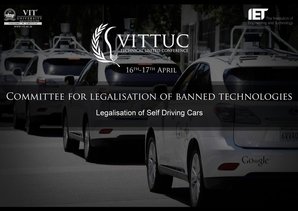

Not long ago, self-driving cars seemed like science fiction. In a report backing self-driving cars, the consulting firm KPMG and the Center for Automotive Research recently predicted that driving is “on the brink of a new technological revolution.” Though, there are some compelling reasons to support self-driving cars like they can make driving more efficient and safer by eliminating distracted driving and other human errors. But as the momentum for self-driving cars grows, one question is gaining momentum: Should they even be legal? And if they are, how will the laws of driving have to adapt? All our rules about driving — from who pays for a speeding ticket to who is liable for a crash — are based on having a human behind the wheel. This will have to change. As self-driving cars become more common, there will be a flood of new legal questions. If a self-driving car gets into an accident, the human who is “co-piloting” may not be fully at fault — he may even be an injured party. Whom should someone hit by a self-driving car be able to sue? The human in the self-driving car or the car’s manufacturer? New laws will have to be written to sort all this out.


Historical Crisis Committee


The World War II was a war that saw active participation of countries in Eurasia until 1941. For the Chinese, war began in 1931, when Japan invaded northeastern China, setting up a Japanese state called Manchukuo. By 1938 Japan occupied much of China and had taken Nanking, longtime capital of China, where Japanese troops killed more than 42,000 civilians. For Europeans, war began in 1939, when Germany invaded Poland. The war till 1941 received support in terms of war machinery, fuel, etc. from the United States of America. Sensing the growing enmity between Japan and the United States of America ever since late 1939, the League of Nations has decided to call a conference dated on 20th November,1941. With its main objective to avoid active participation of countries outside the Eurasia region in the war and try to find ways to end the war. The League of Nations especially fears the active involvement of the USA ever since they have heard rumors of them possessing technology that can wipe of an entire city or country also.


Futuristic Committee for Control of Artificial Intelligence


Most AIs of today, like IBM’s Watson, Apple’s Siri or Microsoft's Cortana, are designed to accomplish very narrow tasks. Each of these AI systems performs well in their specific problem domain, but have not harnessed the true potential of Artificial Intelligence that is, they are not able to easily learn how to do new things. In contrast, the distant future promises of building a single, unified system that will eventually be generally intelligent like a human. That means a machine that will be able to make sense of the world around it, building a complex and nuanced model of reality based on past experience and current sensory data.Much has been debated on whether to set limitations or harness the true potential of AI. Based in the future, it has come to the committee's notice that particular machines powered by AI have outsmarted human beings. Are these machines a threat? Shall machines powered by AI allowed to resume their current operations such as performing high precision medical surgeries or highly adaptable and skilled astronauts that are in search of a distant celestial body that can sustain life or provide for our ever growing need for resources? Or shall pay heed to these occurrences and make a common global law to monitor and limit the use of AI in machines? Dawn the shoes of a delegate and decide the fate of Artificial Intelligence in a world that may mention the above as a basic need.


Back to Top